

White nails can also be meaningful.
Completely white nails with a darker rim at the tip (a condition called Terry’s nails) may be associated with liver disease, congestive heart failure, or diabetes.
Partial whitening can sometimes indicate kidney disease or low protein levels in the blood.
However, small white spots on the nail plate are usually harmless and often result from minor trauma rather than calcium deficiency, which is a common myth.
Dark lines beneath the nail should be carefully evaluated.
While some pigmentation is harmless, especially in individuals with darker skin tones, a dark vertical streak can sometimes indicate subungual melanoma, a serious form of skin cancer.
If a dark stripe appears suddenly, changes shape, or extends into the surrounding skin, a dermatologist should examine it promptly.
Clubbing of the nails is another important sign.
This condition causes the fingertips to enlarge and the nails to curve downward around the fingertips.
Clubbing develops gradually and is often associated with chronic lung diseases, heart disease, inflammatory bowel disease, or certain cancers.
It reflects long-term low oxygen levels in the blood.
Horizontal ridges across the nails, known as Beau’s lines, may appear after severe illness, high fever, major stress, surgery, or chemotherapy.
These ridges form when nail growth temporarily stops due to systemic shock or metabolic stress.
The depth of the ridge can sometimes reflect the severity of the event.
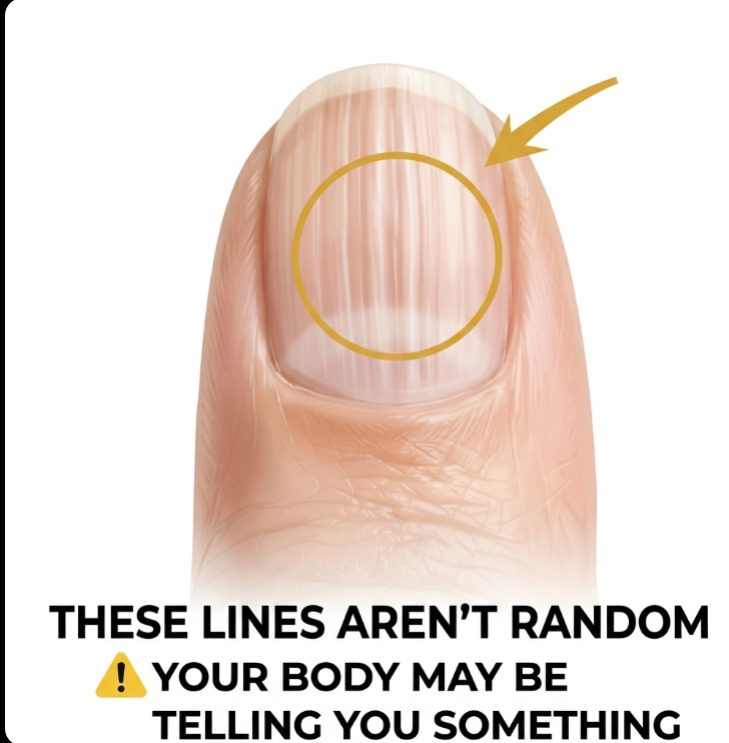
Vertical ridges, on the other hand, are common with aging and usually harmless.
However, if they are accompanied by splitting or discoloration, they could signal nutritional deficiencies, particularly low levels of magnesium or vitamin B12.
Pitting of the nails, which appears as small dents or depressions in the nail surface, is often associated with autoimmune conditions such as psoriasis.
Psoriasis affects skin cell turnover, including in the nail matrix. Nail pitting may also occur in alopecia areata or other inflammatory disorders.
Red or brown streaks under the nails could indicate small areas of bleeding called splinter hemorrhages.
These may result from minor injury, but when multiple streaks appear without trauma, they can sometimes signal heart valve infections (endocarditis) or systemic vasculitis.
It is important to emphasize that nail changes are not diagnostic on their own.
Many nail abnormalities have harmless explanations, including aging, environmental exposure, or temporary stress.
However, persistent, unusual, or rapidly changing nail signs—especially when accompanied by other symptoms—should prompt medical evaluation.
Maintaining nail health involves balanced nutrition, adequate hydration, proper hygiene, and protection from excessive chemicals.
Diets rich in protein, iron, zinc, biotin, and essential vitamins support healthy nail growth.
Regular medical check-ups can also identify underlying issues before nail changes become severe.
In conclusion, fingernails truly can act as a “mirror” reflecting internal health.
Changes in color, shape, texture, or growth pattern may provide clues about nutritional deficiencies, circulation problems, organ dysfunction, autoimmune disorders, or systemic disease.