

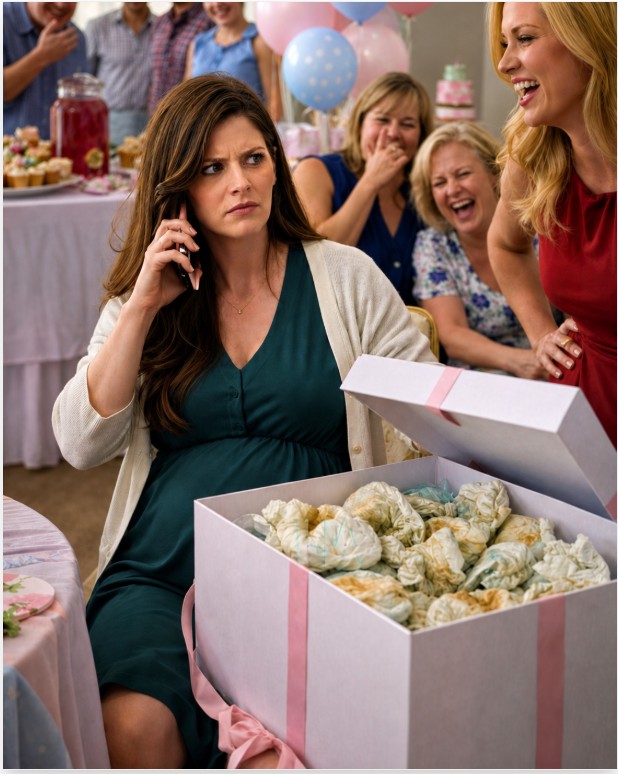
She wipes at her face. “Where am I supposed to go?”
It is not the question of a villain. That’s the problem. Family disasters rarely arrive wearing horns. They arrive in the faces of people you have fed, driven, covered for, loved, and excused until your own reflection starts to look like an accomplice. For a second, the old instinct rises. The one that wants to soften, calculate, fund a temporary rental, make sure she has groceries, manage the shame into something survivable.
Then you remember the diapers.
You remember Camila and Mateo in the stories other women tell, maybe one day hearing that their aunt once mocked them before they were even born because their mother had money and she had none. You remember your own child, who will come into this family soon enough and learn quickly from what you tolerate. Love without boundary becomes inheritance in the worst way.
“You have one week,” you repeat.
Diego looks at you then, carefully, searching not for permission but for whether you still know what you are doing. You do. That is the strange peace of it. “If you leave by Saturday, I won’t report the theft from mamá’s account, and I won’t attach the Iván transfers to the civil filing. If you stay, everything goes in. Every statement. Every name.”
Mariana’s face tightens.
“You’d ruin me.”
You hold her stare.
“No,” you say. “I’m the only reason you still have a version of yourself left to salvage.”
That ends the afternoon.
She leaves the shower early, not in dignity but in fragments. She stuffs random gifts into a bag, ignores your mother’s broken pleas to slow down, and almost walks out without the used-diaper box until Teresa hisses that she should at least take her filth with her. Diego carries the box to the porch and leaves it there like evidence. Mariana drives away too fast, tires spitting gravel, the kind of exit people make when they know they can’t win the room anymore.
When the house finally empties, the silence is almost holy.
Balloons still float. Half-eaten cake leans in its white frosting. Tiny gold confetti stars cling to the floor near the gifts. Everything looks like a celebration that got frightened halfway through and forgot how to finish being happy. You stand in the middle of the living room with your hand on your stomach and let the quiet settle around the place where your old role used to live.
Diego comes back from the kitchen and stands beside you.
He doesn’t say anything at first. That matters. One of the great mercies in marriage is a partner who understands that some moments do not need instant moral commentary. At last he says, “You really were going to give it back today.”
You nod.
He looks around the room, at the tissue paper, the cookies, the folded blankets, the plastic letters spelling BABY on the mantle. “She would have laughed, then cried, then posted about what a good sister you are,” he says. “And she would have done it all over again in a year.” You turn to him. He isn’t smiling. “I know,” you say.
That night you don’t sleep much.
Not because you doubt the choice. Because adrenaline has nowhere clean to go once the fight is over. At midnight your mother calls. At one, she calls again. You ignore both. At two-thirty, Diego wakes and finds you sitting at the kitchen counter with tea gone cold beside you, staring at the eviction notice draft as if paper could somehow answer the questions family never does.
He sits across from you and says the thing you were afraid he might be thinking.
“Why didn’t you tell me you bought the mortgage?”
The question doesn’t have accusation in it. That makes it harder. You stare at your mug. “Because I knew you would tell me to be careful,” you say. “To think about the family. To wait until after the baby. To make sure I wasn’t acting from hurt.” He doesn’t deny it, which you appreciate more than comfort. You go on. “And if I’d waited for everyone to be ready for the truth, she’d still be in that house ten years from now blaming me for every payment she missed.”
He leans back and rubs one hand over his face.
Then he nods. “You’re right,” he says. “And I hate that you’re right.” That is the closest thing to perfect support anyone has ever offered you in a family war. Not blind agreement. Recognition of the hard shape of reality and the willingness to stand next to you anyway.
The week that follows burns hot and ugly.
Your mother goes to see Mariana on Tuesday and comes back looking twenty years older. Mariana cries, says she’s being punished for a joke, says Iván left the second he heard about the mortgage transfer, says she never meant for the account withdrawal to count as stealing because “it was still family money.” Teresa, suddenly converted to righteousness now that public humiliation threatens the family image, tells anyone who will listen that she always knew Mariana had no gratitude. Rebeca hears that and says Teresa has all the moral consistency of wet cardboard.
By Wednesday, Mariana tries charm.
She shows up at your gate with coffee and pastries from your favorite bakery, wearing sunglasses too large for sincerity and a loose cardigan meant to make her look small, tired, approachable. The old script. You don’t let her in. You speak through the intercom while Diego watches from the hallway.
“I’m sorry,” she says.
Not for the diapers. Not for the mortgage money. Not for the years of resentment sharpened into little cuts. Just the broad, convenient phrase, offered like a key she assumes will still fit. You let her stand in the sun long enough to feel the distance between apology and repair.
“For what?” you ask.
The silence after that tells you everything.
She starts crying again and says she was jealous, overwhelmed, humiliated by needing help, terrified of losing the house, angry that your life always seemed easier. Easier. The word scrapes. Easier, as if your degree, your business, your stable marriage, your years of carrying both your own life and half of hers arrived from weather, not work. Easier, as if pregnancy while running a business and managing family chaos is some soft feminine vacation.
“You get six more days,” you say.
Then you disconnect the intercom.
Friday brings the final insult.
A cousin forwards you a screenshot Mariana posted to a private group chat she forgot included one woman who still likes you more than gossip. It is a photo of the decorated baby shower table before the disaster, captioned: Must be nice buying people’s houses so you can pretend to be the victim. Under it are heart reactions, two laughing emojis, and one message from a friend asking whether you are “making everyone watch the good-sister act again.” You stare at the screenshot until the old pity inside you dies for good.
That afternoon you call Valeria.
By evening, the civil possession filing is ready in case Mariana fails to leave by the deadline. You also send the screenshot to your mother. Not to hurt her. Because she deserves to know what her silence kept raising.
Saturday morning arrives bright and merciless.
You wake before seven, dress in a loose linen blouse and maternity jeans, tie your hair back, and stand on your porch with a locksmith, a deputy, Valeria, and Diego beside you. The street is quiet except for sprinkler hiss and one dog barking two houses down. It looks like the sort of suburban morning where people buy fruit and wash cars and imagine disgrace lives elsewhere.
Mariana opens the door on the second knock.
She is wearing one of your old college sweatshirts, the navy one you lent her three winters ago and never got back, and for a second the sight of it is almost too much. Family theft is often intimate long before it becomes financial. Her eyes move from the deputy to Valeria to the locksmith and finally land on you.
“You actually did it,” she says.
You almost answer with something cutting. Instead you choose precision. “You stayed,” you say. “I said what would happen if you stayed.” The deputy speaks next, formal and neutral, explaining supervised removal, personal essentials, no interference, no damage to property. Mariana listens with her mouth slightly open, as if some part of her still expects adulthood to interrupt the lesson and call it harsh.
Your mother arrives twenty minutes later.
Not because anyone invited her. Because mothers in families like yours always believe there may still be one last way to stand in the doorway and ask for less truth. She sees the locksmith and stops dead on the walk. For a second you think she might beg you to stop. Instead she comes to stand beside you and folds her hands in front of her purse as if holding herself together physically is now the only work left.
“I brought boxes,” she says quietly.
That is how you know she has finally accepted reality. Not because she agrees with every consequence. Because she understands the moment for negotiating around Mariana’s damage is over. Mariana sees the boxes in the back of your mother’s car and starts sobbing in earnest. It would almost be unbearable if the week had not hardened you properly.
The move-out takes three hours.
Shoes, half-burned candles, fake plants, kitchen pans you bought, unpaid electricity bills, unopened final notices from the bank, a framed photo of Mariana and Iván in Valle de Bravo she forgot to hide, all of it passes through the front door in cardboard and silence. Diego carries the heavier boxes. Your mother packs the bathroom. Valeria sits at the dining table documenting everything like a woman measuring out justice in square footage. The deputy watches the hall while the locksmith works on the front cylinder.
Halfway through, Mariana tries once more.
“You’re doing this because I embarrassed you,” she says, standing in the living room surrounded by the visible inventory of her own life. Mascara stripped. Hair knotted. The last performance nearly gone. “If it hadn’t been the shower, you would have handed me the house.”
You look at her and think of all the years that sentence contains.
The truth is almost. Almost, yes. If the shower had gone the way you planned, if she had come in fragile instead of vicious, if she had accepted grace without trying to publicly humiliate the pregnant sister who was still about to save her. That is what makes the downfall so sad. Not that it had to happen. That it almost didn’t.
“Yes,” you say.
The honesty lands harder than insult.
Mariana freezes. Your mother closes her eyes. Diego stops in the doorway with a taped box balanced in both hands. No one moves because everyone needs a second to absorb what you have just given away. Not the house. Something worse. Proof that she ruined the version of the story where she was still loved enough to be rescued.
“I was going to hand it back,” you say.
Your voice is steady, but the room feels tender around the edges now, like bruised fruit. “The transfer papers were in the gift bag in my closet. I wanted you to open the real present after the joke gifts, after the cake, after everyone saw that family could still become something kinder.” Mariana’s mouth opens. Closes. Opens again.
Instead of rage, she looks shattered.
That is the moment your family changes permanently. Not with the deputy. Not with the lock. Not with the house. With that truth. The knowledge that Mariana was not denied mercy by fate or poverty or some cold wealthy sister. She stood in the exact doorway of grace and threw a box of used diapers through it.
Your mother starts crying first.
Not loud. Not theatrical. The tired, private crying of a woman who suddenly understands the full cost of every time she said let it go because she was exhausted. She sits on the edge of the sofa and presses both hands over her face. “I helped make this,” she says. No one answers because there is nothing to soften it with.
Mariana sinks into the armchair by the window.
For the first time in years, she has nothing sharp left to throw. No joke. No accusation. No borrowed outrage. Just the stripped, ugly knowledge that she destroyed the best outcome herself. She whispers, “I didn’t think you’d stop loving me over one stupid thing.”
And there it is, the rotten center.
Not that she didn’t know it was cruel. Not that she didn’t mean to humiliate you. But that she fully expected your love to survive any amount of disrespect as long as she remained the one needing more. That is what entitlement looks like after years of rescue. It starts reading generosity as a permanent utility service.
You crouch carefully so your knees don’t protest and your belly doesn’t pull.
Then you speak at her eye level for the last time as the sister who once might have saved her again. “I didn’t stop loving you over one stupid thing,” you say. “I stopped offering you my life as the place where all your worst choices get to land safely.” She looks at you through tears, and for once there is no argument hiding behind them.
When the last box is loaded into your mother’s trunk and the locksmith replaces the final back-door cylinder, the house sounds different.
Lighter, maybe. Or just emptier in the right places. Mariana stands in the driveway beside her things while your mother tells her she can stay in the guest room for two weeks and not one day longer. Diego hands you the old sweatshirt she had been wearing and raises an eyebrow until you laugh and tell him to put it in the donation pile. The deputy asks if you need anything else. You look at the porch, the windows, the still-open front door, and realize you do not.
By evening, the baby shower decorations are gone too.
You and Diego take down balloons while takeout containers sit open on the kitchen island and the house breathes around you. The used-diaper box disappeared in the first trash run of the afternoon, but the memory of it lingers strangely less than you feared. Humiliation loses some of its poison once the people who witnessed it also witness what followed.
As the sun goes down, Diego finds the small cream gift bag in the back of your closet.
Inside are the original transfer papers you meant to sign over to Mariana and a handwritten card you started three times before getting the tone right. He reads neither without asking. He just holds the bag for a second, then sets it gently on the bed and looks at you.
“What do you want to do with it?”
You stand in the doorway for a long moment.
Then you take the unsigned papers out, tear them cleanly down the middle, and drop them into the recycling bin. The card you keep. Not for sentiment. As evidence. A reminder that mercy offered to the wrong people often comes back wearing your humiliation unless you learn how to lock the door first.
Months later, when your daughter is born healthy and furious and perfect, your mother cries in the hospital room and asks whether she can hold her.
You let her.
Not because everything is fixed. It isn’t. Mariana is living in the guest room under strict rules and the kind of silence that finally sounds like consequence instead of sulking. Iván is gone. The house is back in your name clean and clear. Your family is not healed so much as rearranged around one truth it can no longer pretend not to know: love without boundaries breeds the cruelest forms of dependence.
But when your mother cradles your daughter and whispers that no one in this family will ever again make a child feel too expensive to belong, you believe she means it.
Later, after visitors leave and the room goes soft with hospital quiet, Diego sits beside your bed with your hand in his and says, “She changed everything before she was even born.” You look down at the tiny sleeping face in the bassinet and think of the baby shower, the diapers, the house, the paper, the lock, the week that split your family in half and somehow left it more honest than it had been in years.
“No,” you say. “She just made it impossible for me to keep lying about what was broken.”
That is the real ending.
Not that Mariana lost the house. Not even that everyone saw the prank curdle into scandal. The real ending is that when your child comes into the world, she enters a family where one woman finally stopped paying for peace with her own dignity. And because of that, the whole old game dies right there, beneath balloons, sugar frosting, and the sour stink of a joke that exposed everything.
THE END
See more on the next page
Advertisement